
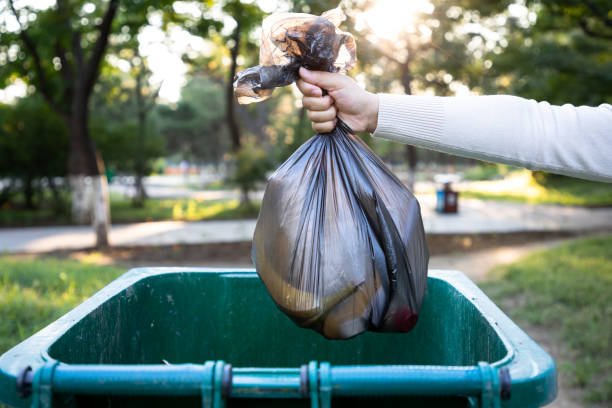
There are more bin options available in the UK right now than at any point in the last decade. That’s mostly a good thing. It’s also made the buying decision more confusing than it needs to be.
People end up overthinking it. Or, more often, they underthink it buying the cheapest available option, living with the consequences for two years, and then buying something better. Let’s skip the middle part.
The Basics Most People Get Wrong
Size matters more than people expect. And not in the obvious direction.
Most households under-buy on volume. A family of four generating a week’s worth of waste into a 30-litre kitchen bin will be emptying it every two or three days. That’s not a bin that’s a constant chore. A 50-litre unit, or a dual-compartment 2×25-litre for general waste and recycling, makes the daily experience noticeably different.
For businesses, the problem usually runs the other direction. Large bins placed in inconvenient locations get filled incorrectly because staff just throw everything in to avoid multiple trips. Smaller bins in more locations tend to perform better for waste separation.
Material Choices: What Actually Holds Up
Plastic bins dominate the market. That’s fine for most uses. But plastic quality varies enormously.
Thin-walled injection-moulded bins the kind that cost £8 at a supermarket work for a year or two if you’re careful with them. In a busy household or a shared office, they crack at the hinge points, the lid warps, and the pedal mechanism fails.
Higher-grade polypropylene or HDPE construction holds up significantly better. You’ll pay £20–£40 more. Over five years, that’s money well spent.
For outdoor rubbish bins, UV degradation is a real issue. Pale-coloured bins left in direct sunlight go brittle within two to three years in the UK climate. UV-stabilised materials — specifically mentioned in the product spec last considerably longer. Worth checking before you buy.
Stainless steel bins are worth the premium for kitchens that care about hygiene. They wipe clean properly, they don’t absorb odours the way plastic does, and they don’t look cheap after six months of daily use. The fingerprint smudging is the only genuine downside, and matte finishes mostly solve that.
Lid Mechanisms: Pedal, Swing, Sensor, or Open
This is more of a lifestyle question than people realise.
Pedal bins keep hands off the lid good for kitchen use, better hygiene, useful when your hands are full of food waste. The mechanism is the most common failure point; quality pedals make a significant difference to lifespan.
Swing lids are common for high-traffic areas where hands-free is less critical office common areas, utility rooms. They’re less fussy to maintain.
Sensor bins are genuinely useful in kitchens if you’re dealing with small children or elderly users for whom the pedal is awkward. The sensor delay (typically 2–4 seconds before closing) can be slightly annoying. I’ve found that about half the people who buy them love them; the other half switch back to pedal.
Open-top bins are fine for dry materials paper recycling, cardboard but not appropriate for food waste or anything with odour.
Outdoor Bins: What You Actually Need
A 240-litre wheelie bin is the UK standard for most household kerbside collections. Your council provides one. The question is whether you need additional capacity for recycling or garden waste streams that your council may or may not collect.
For gardens, a separate 240-litre brown or green bin for garden waste makes a real difference in summer when grass cuttings alone can fill a bin in a week. If your council doesn’t offer a garden waste collection, a home compost unit handles the organic portion well.
For businesses with outdoor waste points car parks, loading bays, outdoor seating the key requirements are weather resistance, lockable lids if theft or vandalism is a concern, and clear stream labelling. A bin without a lid in a UK winter collects rainwater and creates a soggy, unsanitary mess within days.
Placement Is Half the Battle
The bin in the wrong place gets ignored. The bin in the right place gets used correctly without anyone thinking about it.
Kitchen: under-sink for food waste, near the counter for general waste, a slim unit near the door for paper and recycling if space allows.
Office: at every desk zone for paper, in the kitchen/canteen area for food and recycling, in bathrooms for non-recyclable paper products only.
Outdoors: visible from the main traffic route, accessible without going out of the way, close to where waste is generated rather than at the perimeter of the property.
The Waste Hierarchy Is Worth Remembering
Reduce, reuse, recycle in that order. Rubbish bins are the last line of the system, not the first. If you’re filling a general waste bin faster than you’d like, the better question is what’s going into it and whether any of it could be prevented upstream.
That said: having the right bins in the right places, sized correctly, and made from materials that last, is one of the lowest-effort, highest-return changes you can make to how a home or business handles waste.
The bin you pick shapes what you do with your waste, more than most people realise. Get that bit right and the rest of the system tends to follow.